
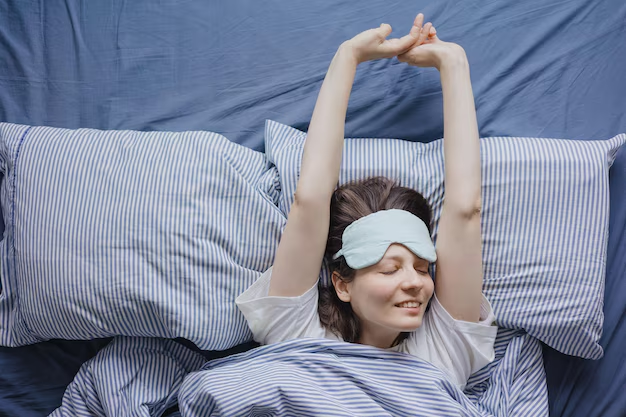
Introduction: Why Deep Sleep is the Ultimate Recovery Tool
For athletes, pushing the limits day after day demands more than sweat and determination—it requires serious recovery. Deep sleep stands at the heart of that process, acting as the body’s natural reset button. During these crucial hours, muscles repair, inflammation calms, and energy stores rebuild.
But quality deep sleep isn’t always easy, especially when training intensity ramps up or stress sneaks in. Mastering athlete-approved deep sleep techniques can mean the difference between hitting a new personal best and facing burnout.
This guide shares practical, proven strategies to help you unlock the restorative power of deep sleep—so your body recovers fully and keeps performing at its peak.
The Role of Sleep in Athletic Recovery
Sleep is more than rest—it’s when your body repairs itself. For athletes, high-quality sleep:
-
Heals muscles after training
-
Restores energy for the next workout
-
Boosts immunity to prevent illness
Without enough deep sleep, your body can’t fully repair the micro-damage from workouts, slowing progress and increasing injury risk.
What is Deep Sleep (and Why It’s Key for Athletes)?
Deep sleep is the most restorative stage of your sleep cycle. It’s when your body:
-
Repairs muscle fibers and tissues
-
Reduces inflammation
-
Recharges energy stores
Without enough deep sleep, recovery suffers—and so does your performance.
Signs You’re Not Getting Enough Deep Sleep
Your body sends warning signals when it’s missing deep recovery time. Watch for:
-
Morning fatigue (waking up feeling unrefreshed)
-
Daytime brain fog and forgetfulness
-
Lingering soreness from workouts
-
Frequent illnesses
-
Restless nights with frequent waking
10 Athlete-Approved Deep Sleep Techniques
-
The Temperature Tune-Up
Keep your room cool (16–19°C / 60–67°F) for optimal sleep quality. -
Pre-Bed Power Down
Avoid screens for at least 90 minutes before bed—blue light disrupts your sleep cycle. -
Sleep Schedule Lock
Go to bed and wake up at the same time every day (even weekends). -
Nighttime Snack Hack
Choose light, sleep-friendly snacks like bananas with almond butter or tart cherry juice. -
Recovery Position
Side sleepers: pillow between knees. Back sleepers: pillow under knees. -
Breathwork Bonus (4-7-8 Method)
Inhale for 4 sec → Hold for 7 sec → Exhale for 8 sec. Repeat 5 times. -
Blackout Boost
Use blackout curtains and a sleep mask to keep your room completely dark. -
White Noise Trick
Block disruptive sounds with white or brown noise machines, or calming nature sounds. -
Legs-Up Recovery
Lie with legs elevated against a wall for 10 minutes before bed to reduce swelling. -
No Clock Rule
Hide clocks and phones—clock-watching increases stress and delays sleep.
Extra Recovery-Boosting Sleep Tips
-
Take short power naps (20–30 min) for mid-day recovery.
-
Manage evening hydration to reduce nighttime bathroom trips.
-
Use calming bedtime affirmations to reduce stress.
Mistakes to Avoid for Better Deep Sleep
-
Overtraining without enough rest
-
Relying on sleep medications too often
-
Going to bed stressed or overthinking
Sample Athlete Bedtime Routine
-
Light stretching or yoga (10 min)
-
No screens 90 min before bed
-
Small protein snack
-
Legs-up recovery pose
-
Breathwork or meditation
Conclusion: Sleep Your Way to Peak Performance
Deep sleep is your body’s most powerful recovery tool—free, natural, and available every night. With these 10 athlete-approved techniques, you can maximize recovery, prevent burnout, and perform at your best.
Tonight, try just one or two tips. Small changes lead to big performance gains. Your muscles, brain, and future self will thank you.
💤 Sleep deeper. Recover stronger. Perform better. 🚀
Post a Comment